

Safety - Incident Reporting
Reporting keeps improving — thank you
More members are reporting more incidents, more often. That is exactly what we want to see, and it is already changing what we can do about safety.
In competition, reports of serious incidents (excluding concussion) have held steady across the past three quarters at around 35 a quarter, after a more variable 2024 and 2025. That steadiness suggests reporting at events is becoming settled, established practice.
Outside competition, reports are climbing. Non-competition reports rose from 20 in Q4 2025 to 38 in Q2 2026 — and for the first time they now outnumber reports from competition. Coaching and training and squad reporting has grown too. Part of that reflects the linking of incident reports with insurance claims. It also reflects members recording things that would once have gone unrecorded.
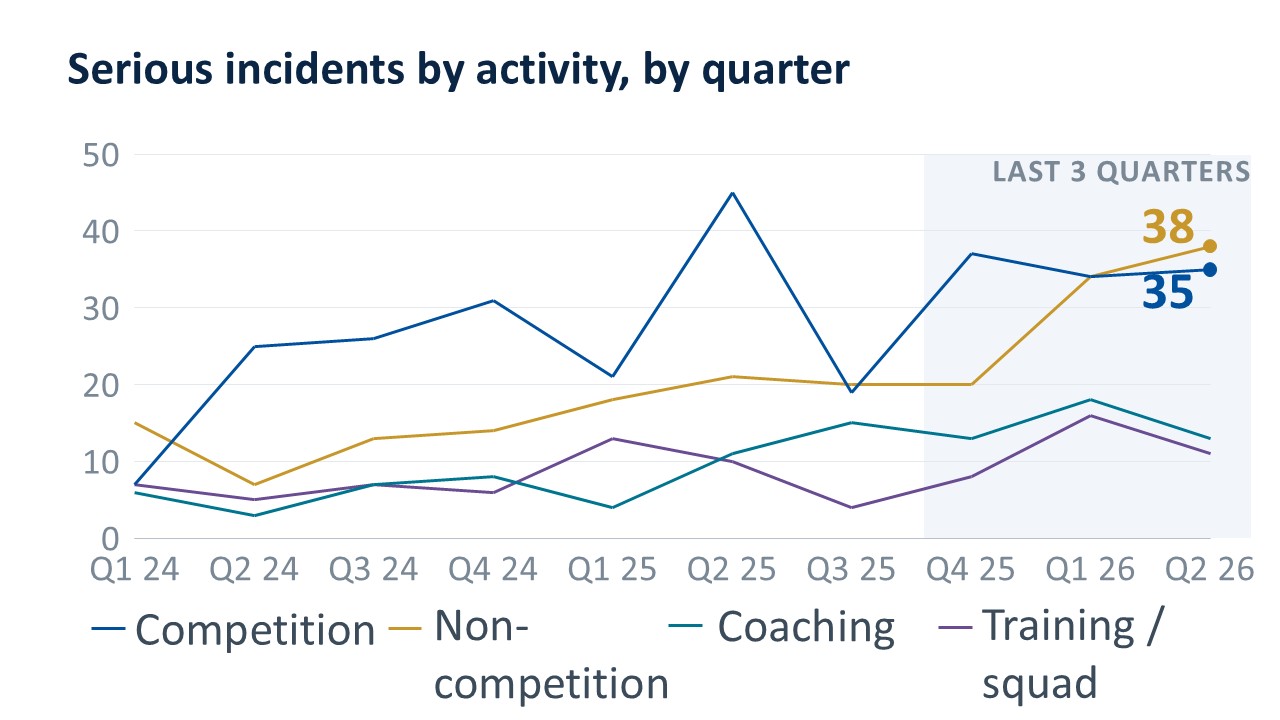
Serious incidents exclude concussion. Counts are reports received, not incidents occurring — a rise can reflect better reporting rather than more harm.
|
Why it matters. The more we know, the more we can do. Reports let us support members who are injured, spot hazards before they cause harm, and see whether the safety changes we make are actually working. |
Competition reports by discipline, January–June 2026
Show Jumping and Eventing account for most serious incidents reported in competition over the past six months, consistent with previous periods. Driving, Endurance and Vaulting recorded none.
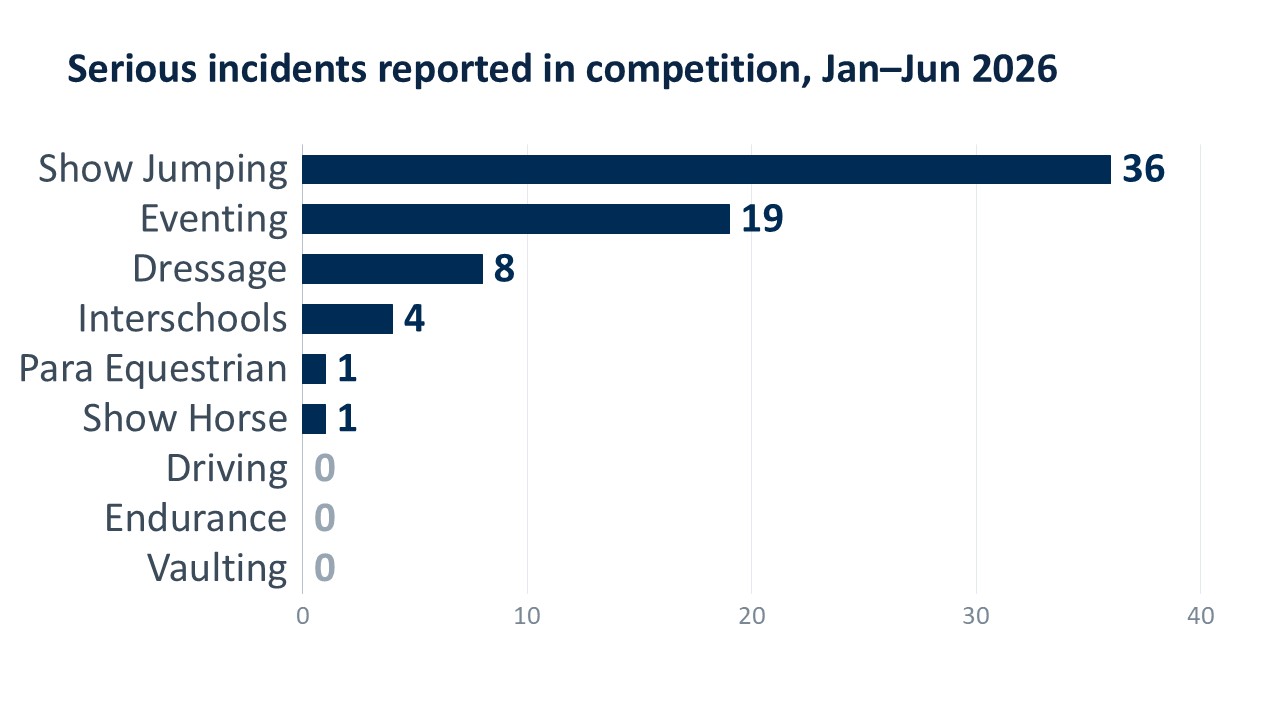
Counts are not adjusted for the number of members or starts in each discipline, so they should not be read as a measure of relative risk.
Keep them comingIf something happens, report it — every time, big or small. Reports take a few minutes and go straight to the safety team. Submit an incident report |
Figures cover serious incidents only and exclude concussion, which is reported separately. Q2 2026 data is current as at the date of publication and may be revised as late reports are received.






 Newsletter