

Coach of the Month – April 2026
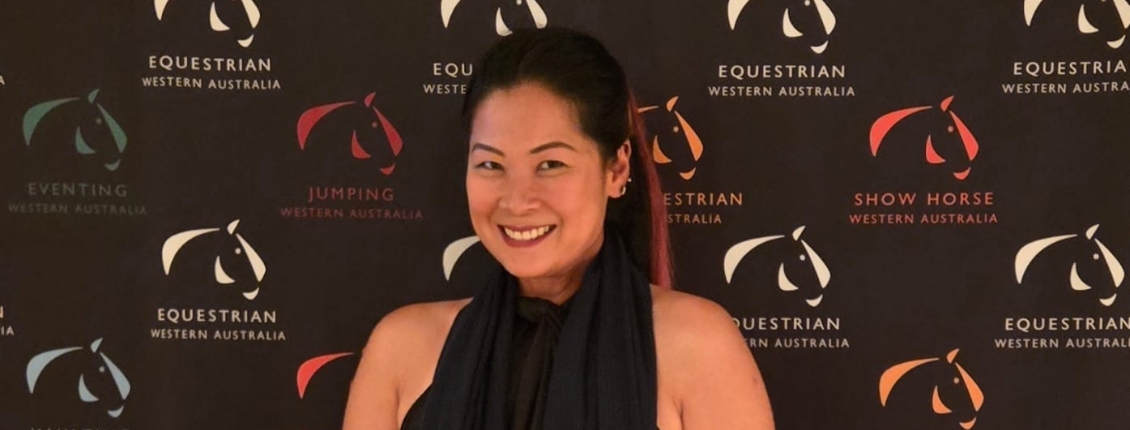
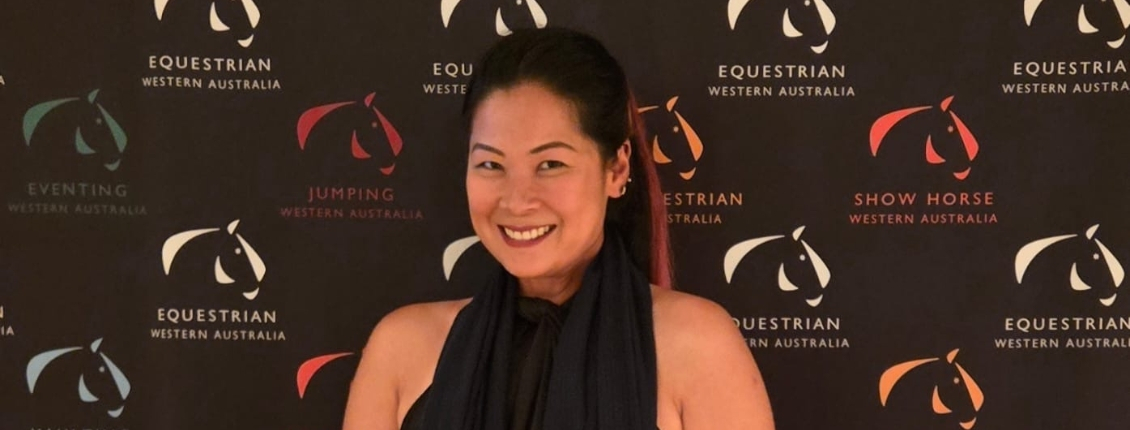
For Krystal Wang, Western Australia's Coach of the Year for 2025, coaching has always been about more than producing a better performance in the arena. At its heart, her work is about creating better understanding between horse and rider, and giving both the confidence to find a more willing, relaxed and enjoyable partnership.
A rider and competitor from a young age, Krystal began competing when she was around 10 years old. She says riding came naturally to her, and over time she found herself helping friends who would ask how she approached certain situations or why she rode in a particular way. That early instinct to help others eventually developed into a clear coaching path.
The philosophy of 'for every ride I can make better, there is one happier horse', sits at the centre of Krystal’s coaching today. While she has a strong technical background, her lessons are not simply about achieving a movement or completing an exercise. They are about listening to what the horse is trying to say, helping the rider understand that message, and creating a safer, more positive experience for both.
Krystal trained under Sue Leslie in Victoria, who supported her through her Intro, Level 1 and Level 2 coaching qualifications. Krystal’s Level 1 is a general qualification, while her Level 2 is a Dressage specialist qualification. Before specialising further in Dressage, she also Evented in Victoria, giving her a broad understanding of riders and horses across disciplines.
She says the Dressage specialisation helped deepen her understanding of biomechanics, anatomy and how the horse’s body works. That knowledge now supports her work across the board, whether she is helping riders with flatwork foundations, confidence, training issues or a more refined understanding of how their horse is moving and responding.
Although Krystal values technical education, her approach is also strongly grounded in feel, awareness and empathy. She believes horses are not “naughty”. “Horses are trying to tell us something,” she explained. “They’re not just naughty, they’re not just silly. They’re all trying to say something. And if we can find out what they’re trying to say, then you’ll be safe and they’ll be happy.”
One of the things Krystal enjoys most about coaching is seeing a visible difference from the beginning of a lesson to the end. She looks for the moment when either the rider, the horse, or both, begin to understand what is being asked in a calmer and clearer way.
“I enjoy seeing a difference,” she said. “What I enjoy the most is this light bulb moment that goes off in either the rider or the horse, or both. They just go, ‘Oh wow, I get it. Life doesn’t have to be stressful. I don’t have to be tense. I can still do what I’m supposed to do, but nicely.’”
For Krystal, that change is often most visible in the horse. She notices when a horse’s expression softens, when tension begins to leave the body, and when a rider realises that the horse they thought was difficult can in fact be more willing when the conversation becomes clearer.
“These riders never thought it was possible to not have a dragon,” she said. “That’s my favourite part of it all.”
Krystal’s coaching has also evolved through the different types of riders she has worked with. During her time in Singapore, where she worked at a riding school for around four years, much of the environment was competition-focused and results-driven. She worked with riders on highly educated Dressage horses, often with a strong emphasis on performance outcomes. Since then, she has found herself increasingly working with riders who are less focused on winning and more interested in having a good experience with their horse.
“I’ve just encountered more riders here that go, ‘I don’t care if I win, I just want a good experience,’” she said. “People care about the horses now. They just want good experiences, confidence, regardless of anything else. It’s nice to see people put the horse before the sport.”
That ability to adapt is something Krystal believes is essential in a good coach. She is clear that coaching is not about insisting that every student learns in the same way, or pushing through an exercise when either the rider or the horse is becoming frustrated. To her, the responsibility sits with the coach to find another way to explain, ask or support.
“It is not the student’s job to understand the coach,” she said. “It’s the coach’s job to help the student understand.”
Krystal believes a good coach must be fluid enough to change their tone, their explanation or their approach while still working toward the same training outcome. The method may remain consistent, but the delivery must suit the horse and rider in front of them.
“A good coach would be able to change their questioning, change their tone, change themselves for the type of rider and horse, but still execute the same method to help them,” she said.
One exercise Krystal often returns to in her lessons is something she calls the “Lazy Susan”. It is done in walk, with the rider gently turning a circle tight enough that the horse has to think carefully about balance. The aim is not to force the horse, but to encourage it to soften, release tension, focus on its feet and begin to find a more relaxed way through the body.
“In order to turn the circle pleasantly for itself, it has to relax and it has to let something in its body go,” Krystal explained. “It either has to untense something, it has to try and stretch something, it has to focus.”
Her students often describe her as energetic, and Krystal laughs that her lessons are rarely quiet or static. She is moving, explaining, encouraging and keeping the atmosphere positive. There is energy in her teaching, but it is energy with purpose. It is directed toward helping the rider feel capable, helping the horse feel heard, and creating progress that can be felt.
And while horses and coaching are now a major part of her life, Krystal’s alternative dream career may surprise some. She studied biomedical science, and if she had taken a different path, she says she would have loved to become a forensic pathologist.
For now, though, Krystal is focused on helping as many horse and rider combinations as she can. Her coaching is thoughtful, practical and deeply horse-centred. She brings together technical knowledge, lived riding experience and a strong belief that horses become safer, happier and more willing when riders learn to listen.
For Krystal, every improved ride matters, because every clearer ride is another step toward a happier horse and we thank Krystal for ebverything she does for the sport and congratulate he ro being our Coach of the Month.






 Newsletter