

Coach of the Month - February 2026
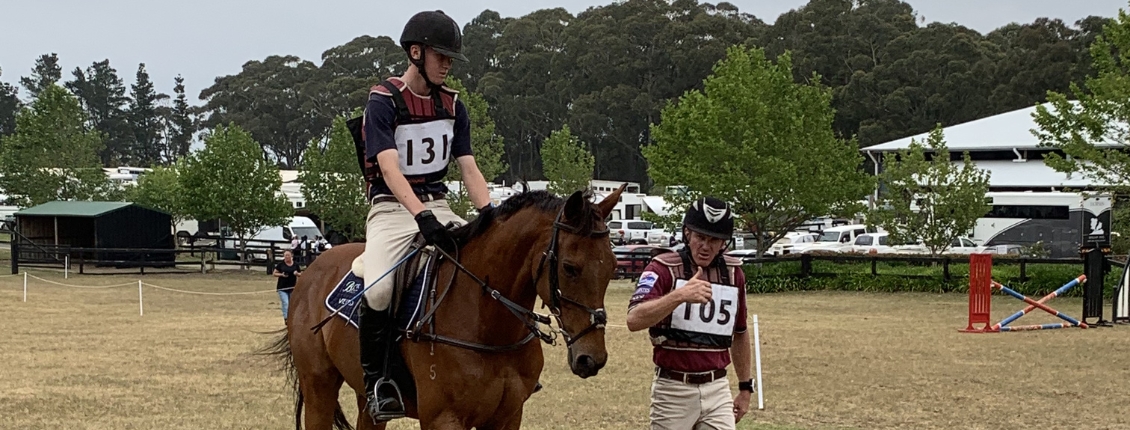
This month’s Coach of the Month is Craig Barrett from New South Wales, whose coaching career began almost by accident and has grown alongside his own journey as an event rider.
Craig first stepped into a coaching role as a teenager while riding at the equestrian centre at Lochinvar with Heath and Rosie Ryan. “I went there when I was about 16,” he explains. “I used to go on school holidays and then once I finished school I went straight there. I was pretty much thrust into the coaching job of some of the other staff.”
What started as helping with staff lessons quickly developed into something more structured. Craig became involved in what was then called “train to teach,” working with groups of aspiring Level One coaches. “We’d have five or six students wanting to learn to teach, and it was my job to show them how to do it. From an early age I had to really understand how to explain things and know the technical details.”
That early exposure shaped his coaching philosophy. “You learned quickly that not everybody processes information the same way. You had to find different ways to explain the same thing to five or six people.”
Craig describes himself as a late starter in the sport. His parents were not horsey, and he did not become serious about riding until he was 16. “I was never a natural on a horse,” he says. “I really had to understand what I was doing. I didn’t just blast my way down a line of jumps. I had to know what my inside leg was doing, my outside leg, my seat, my reins.”
That need to understand the mechanics and feel of riding became one of his strengths as a coach. “Because I had to understand it intellectually, I think that made it easier for me to communicate it to other riders. I had to explain it to myself before I could do it.”
Eventing has always been Craig’s passion, supported by a strong background in dressage. He completed his Level Two accreditation in both Eventing and Dressage and maintains a keen interest in flatwork as the foundation of performance. “The training on the flat really helps the eventing riders,” he says.
Over the years Craig has coached riders from grassroots through to four star level. Among the most rewarding experiences have been seeing young riders grow into elite competitors. He recalls Jessie Irvine Brown as one of his early standouts and more recently Olivia Barton, who attended the Paris training camp and is now based in Belgium.
“For me, it’s about helping them enough that they can make their own way in the world,” he says. “It’s great if they need you at ‘C’ in the Dressage or in the warm up, but they can’t need you there forever. At some point you want to walk away and know they’re happy with what they know.”
That focus on independence is central to his coaching. Craig does not aim to hold riders tightly to his program indefinitely. Instead, he wants them equipped with the tools to think and ride for themselves.
Craig recognises that setbacks and nerves are part of every rider’s journey. “There’s no two riders the same,” he says. “You might think you’re the only one going through something, but you’re not. There are lots of people feeling the same way.”
He values the role of squad systems and group environments in helping riders see that others also struggle. “When you’re in a squad system, you see that even the top riders have tough moments. That makes you feel better straight away.”
He also acknowledges the growing role of sports psychology. “Some of that is above my pay grade,” he says candidly. “So we bring in the experts when we need them.”
When asked what makes a great coach, Craig speaks about the importance of having a system. “You have to have a system that produces horses the riders can cope with,” he explains. “It can’t be too complicated. Most of the people you teach won’t be able to use strength, so the system has to allow for that.”
For Craig, the foundation is simple and consistent. “You’ve got to be able to ride the horse from behind and not hang onto the head. You need a balanced canter and trot and be able to release the reins. If you’re always hanging on, you’re going to struggle. Once riders can do that, a whole new world opens up.”
Rather than relying on a single favourite exercise, Craig draws from what he describes as an encyclopaedia of tools and exercises, selecting what suits each individual horse and rider combination.
Craig laughs when asked how his students would describe him. “Impatient and probably loud,” he admits. Beneath that directness, however, is a coach deeply invested in the long term success of his riders.
If he had not chosen horses, Craig was meant to pursue economics and accountancy. “I’m glad I never went back to that,” he says. “I’ve been in this game too long now. There’s nothing else I’d do well enough to fall back on.”
For Craig, coaching has always been about understanding, clarity and building riders who can stand on their own. It is a journey that began in his teens and continues to shape the next generation of Eventing talent.
We thank Craig for his contributions to the sport and congratulate him on his nomination as our Coach of the Month for February 2026.






 Newsletter