

Australian expertise on the world stage as Kirsten Neil heads to Aachen 2026
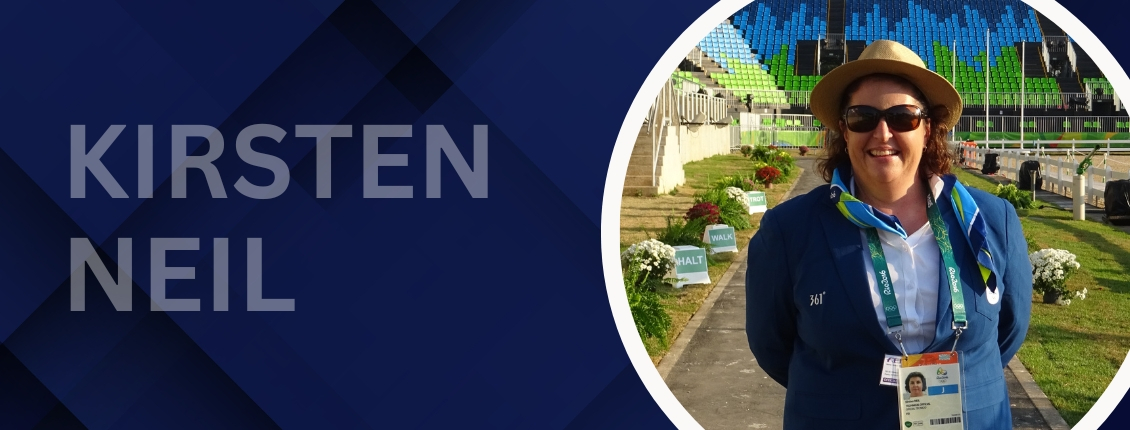
Kirsten Neil will represent Australia as a member of the FEI Veterinary Commission at the 2026 FEI World Championships in Aachen, one of the most prestigious appointments available to an equestrian veterinarian and a significant acknowledgement of Australian expertise on the international stage.
For Kirsten, the call-up brought both excitement and perspective. “I was excited,” she said. “It’s always nice to be considered for those sorts of positions. There are so many people worldwide they could be asking, so it’s nice that they consider somebody from as far away as Australia.”
The Aachen appointment follows a career already marked by service at the highest level, including her role as a member of the Veterinary Commission at the Rio Olympic Games. While the scale and pressure of events like Olympic Games and World Championships are unmistakable, Kirsten says they remain, above all else, a privilege. “They are big events and you are working long hours. They are hard events to do, but they are worthwhile. You are always learning something, no matter how many events you’ve done.”
Although Aachen will be her first time officiating at the famous venue, it has long sat on her personal list of places she hoped to experience. “It’s one of those bucket list events,” she said. “You hear about some of these places and their reputation, and Aachen has an amazing one. It will be very exciting to be there.”
At the heart of Kirsten’s role sits a clear and consistent priority: horse welfare. The FEI Veterinary Commission operates as a team of four, led by a Foreign Veterinary Delegate, alongside the President of the Commission and two associate veterinarians. Together, they oversee everything from arrival examinations and horse inspections through to ringside decision making during competition.
“You’re there as the advocate for the horse,” Kirsten explained. “From arrival exams and checking identification and vaccinations, through to being competition side if something looks irregular and needs to be assessed. Ultimately, it’s about deciding whether a horse is fit to compete, always in the interests of the horse’s welfare.”
That responsibility extends well beyond clinical assessments. Major championships require constant collaboration with ground juries, technical delegates, stewards, team veterinarians, private vets and treating veterinarians. “There are a lot of people involved, with a lot of different personalities,” she said. “You have to work well with everyone while keeping the horse as the number one priority.”
Kirsten graduated as a veterinarian in 1996 and began officiating at FEI events the following year. Over time, that experience has grown to include Olympic Games, European Championships and service as Vice Chair of the FEI Veterinary Committee. That committee work, much of it undertaken during the COVID period, gave her insight into the complexity of international governance.
“You realise how much the FEI actually has to deal with day to day,” she said. “A lot of people think nothing is happening, but there’s an enormous amount going on behind the scenes. You also have to think globally. Something that works well in Europe might be very challenging for Australia or New Zealand, and vice versa.”
Her progression to FEI Level 4 veterinarian also included intensive training in Lausanne, focused on communication, decision making and managing high pressure situations. “A lot of it is learning how to deal with people when emotions are running high, while still being professional and fair,” she said. “You’re interpreting detailed rules, but there will always be situations that aren’t written exactly in the rulebook.”
One of the themes Kirsten returns to often is the role of veterinarians as collaborators, not obstacles. “People sometimes think vets are there to stop them doing things,” she said. “But we’re there to help, to look after the horse and to support riders and teams. There’s no such thing as a stupid question. It’s always better to ask first.”
Kirsten also sees growing importance in communicating what happens behind the scenes, particularly in an era of social media and heightened public scrutiny. “We’ve always been there looking after the horses,” she said. “But explaining what goes on in the background can help people understand that welfare really is the priority, even if they don’t always see it.”
For veterinarians who aspire to follow a similar path, Kirsten is clear that opportunity grows from experience. “It is possible,” she said. “You have to start with the small events and do a lot of them. Put in the hours, build experience and take opportunities when they come.”
She also encourages greater use of FEI exchange programs that support officials gaining overseas exposure. “That experience is incredibly valuable, especially for Australians who are further away and harder to notice internationally.”
As preparations continue for Aachen 2026, Kirsten remains focused on the same principles that have guided her career from the start. Care for the horse, respect for the sport, and the quiet professionalism that underpins equestrian competition at its very highest level.


 Newsletter